
A One-Bag Music-City Shoot
A music trip rarely happens in one room. The day may begin at a record shop, cross a railway platform, pause outside a venue, and finish in a crowd. Packing by the order of those moments makes one camera bag feel much lighter.
Plan the route before the compartments
Most camera bags are packed like cupboards: every item gets a tidy space, but the things needed first end up behind the things needed later. A music-city day works better when the bag follows the route. Morning street shots need quick access. A long lens may wait until soundcheck. Chargers and a spare shirt can stay in the rear of the bag until the hotel.
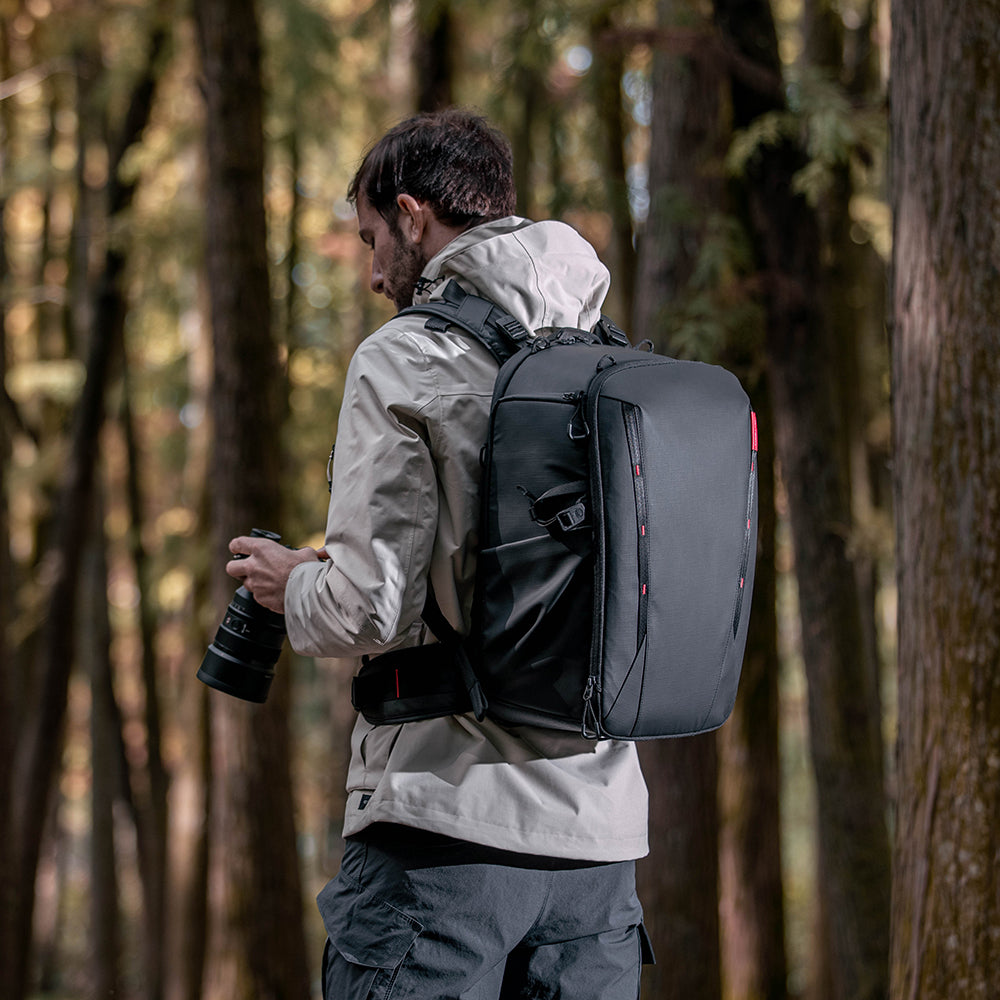
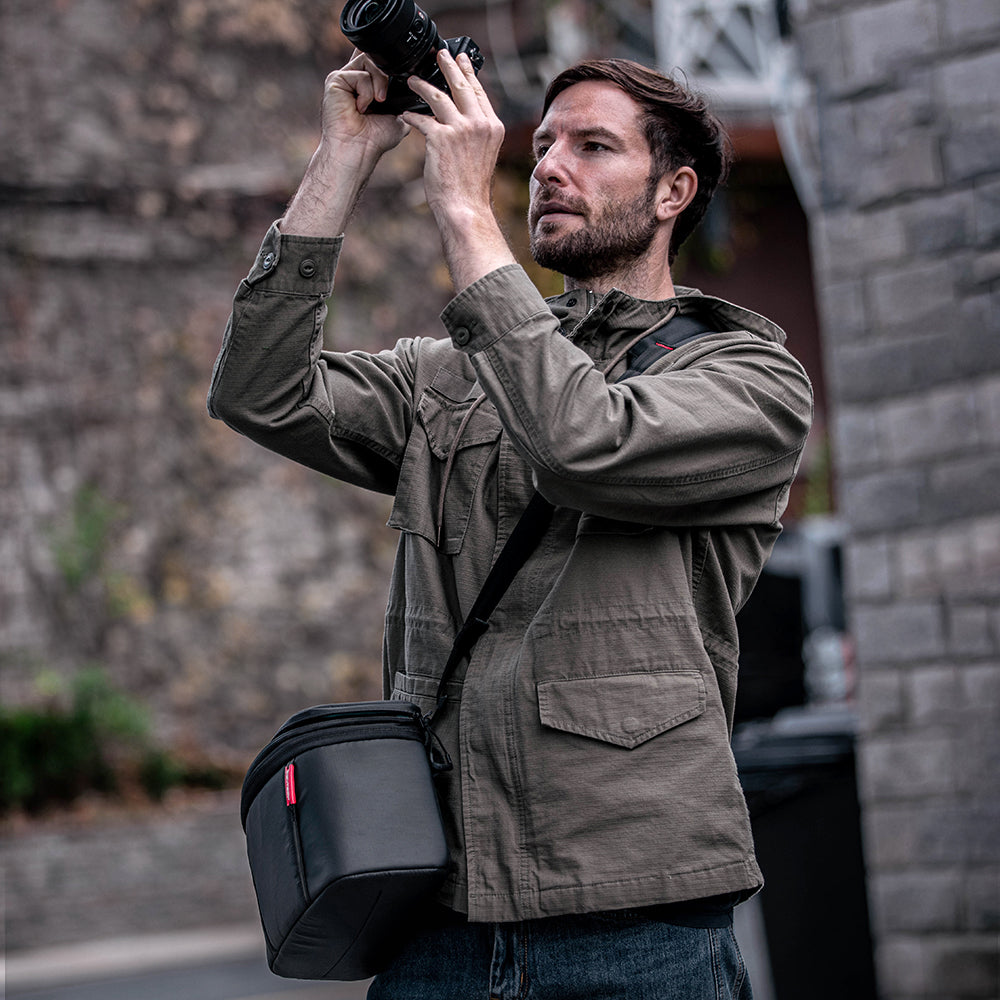
PGYTECH’s OneMo 2 is useful here because it combines a structured camera backpack with a smaller removable shoulder bag. The point is not to fill every available compartment. It is to separate the full-day load from the kit you actually want beside you in a record shop or small venue.
A route that keeps the camera reachable
Morning: streets before the shops open
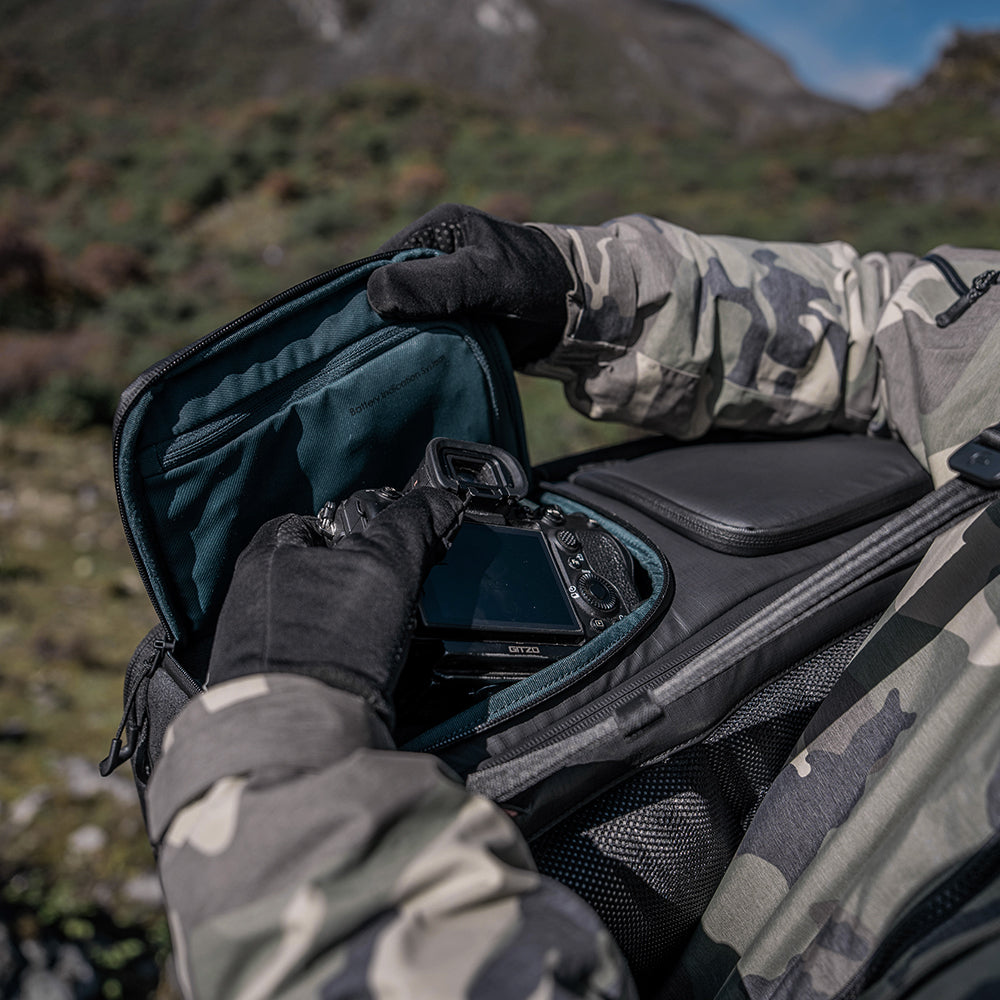
Keep the camera in a side-access position with a compact lens attached. The light changes quickly, and a bag that has to be laid flat for every frame will stay closed.
Late morning: record shops and cafes
Move the camera into the small shoulder bag. Ask before photographing inside, keep the lens short, and leave the large backpack zipped rather than blocking a narrow aisle.
Afternoon: venue exterior and neighborhood
Photograph the route to the venue as well as the sign. Ticket windows, load-in doors, nearby diners, and the final tram stop are the details that make a music-city story specific.
Soundcheck: switch from travel to work
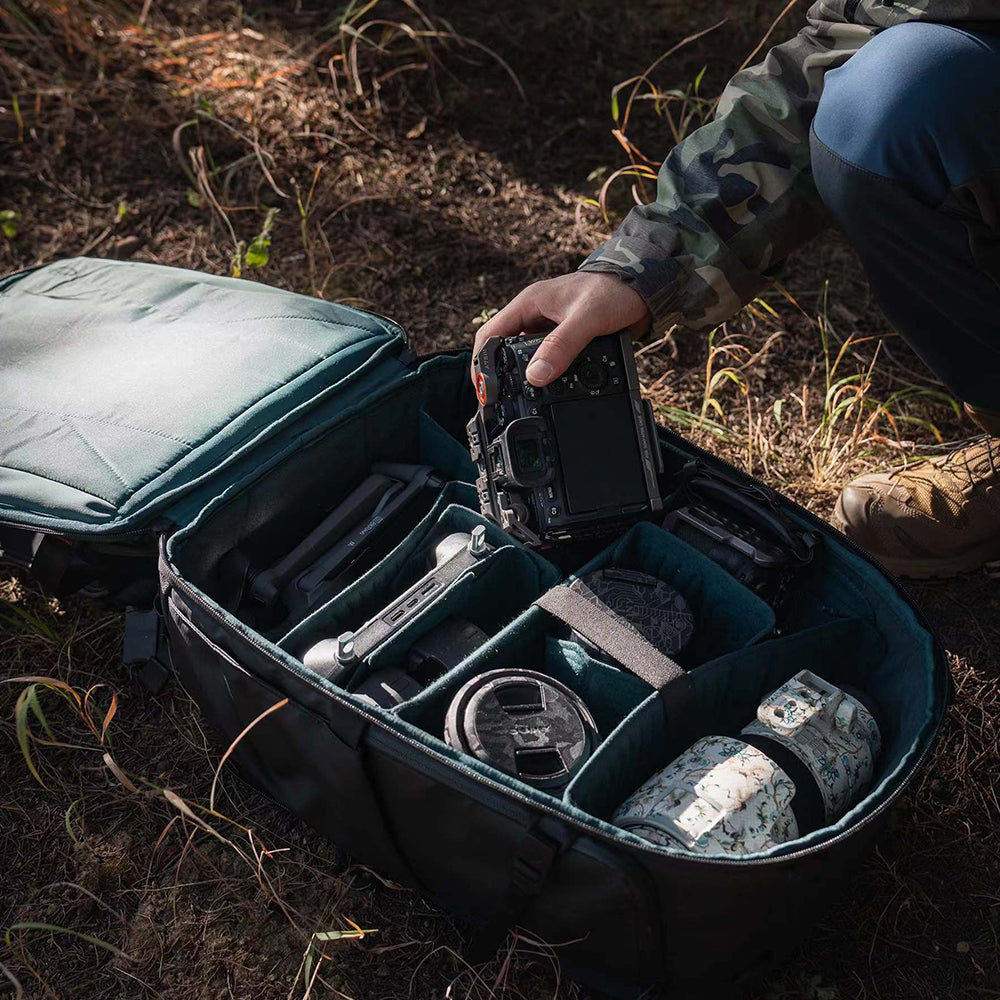
Use the clamshell opening to see the whole kit at once. Add the longer lens, fresh battery, and ear protection, then return everything else to a fixed slot before the room darkens.
After the set: make the exit simple
Pack in the same order every time: camera, lens, cards, batteries, credentials. A consistent sequence is faster and safer than trying to reorganize under venue lights.
Pack by access frequency
The bag’s quick-access doors and expandable front compartment only help if the inside has a hierarchy. Keep the camera and earplugs in the first layer, spares in the second, and hotel-only items in the third. Avoid putting loose accessories in the same space as a lens; a small cable can still scratch glass or jam a zipper.
First reach:
Camera with one lens
Earplugs
Phone
Transit card
Lens cloth
Second reach:
Spare battery
Second lens
Memory cards
Compact microphone
Rain cover
Hotel reach:
Charger
Backup drive
Change of shirt
Toiletries
Printed itinerary
Never loose:
Credentials
Passport
Keys
Used cards
Small adapters
Use the smaller bag as a boundary
There is a temptation to carry every lens into every room simply because the backpack can hold them. The removable shoulder bag creates a useful boundary: choose one body, one lens, a spare battery, and the card you need for the next hour. Leave the rest secured in the main pack.
This is especially helpful at intimate venues. A smaller footprint makes it easier to move without bumping chairs, blocking sightlines, or drawing attention away from the stage. It also changes the way you shoot. With fewer choices, you begin looking for stronger positions instead of changing lenses whenever a frame feels difficult.
Do the comfort check with real weight
The 25-liter OneMo 2 is not a featherweight daypack once its partitions are installed. Comfort depends on how the actual load sits, not on a product photo. Before traveling, pack the exact camera, lenses, laptop, clothing, and water you expect to carry. Walk for forty minutes, climb stairs, and check whether the waist strap transfers weight away from the shoulders.
Then remove something. Most music trips improve when one duplicate lens, oversized charger, or speculative gadget stays home. Capacity should create breathing room, not an excuse to fill every pocket.
Finish the day with the next one in mind
At the hotel, do not merely drop the bag by the door. Copy the cards, put batteries on charge, wipe the camera, and return each item to its assigned compartment. Place tomorrow’s first lens on the camera and move only verified cards back to the ready side.
A good one-bag system is not about owning a perfect bag. It is about reducing the number of small decisions between seeing a moment and making a photograph. When the route, access points, and reset routine agree with each other, the gear becomes quieter and the city gets more of your attention.