
The Playlist: Top 5 Essential Artists for a Latin American Road Trip
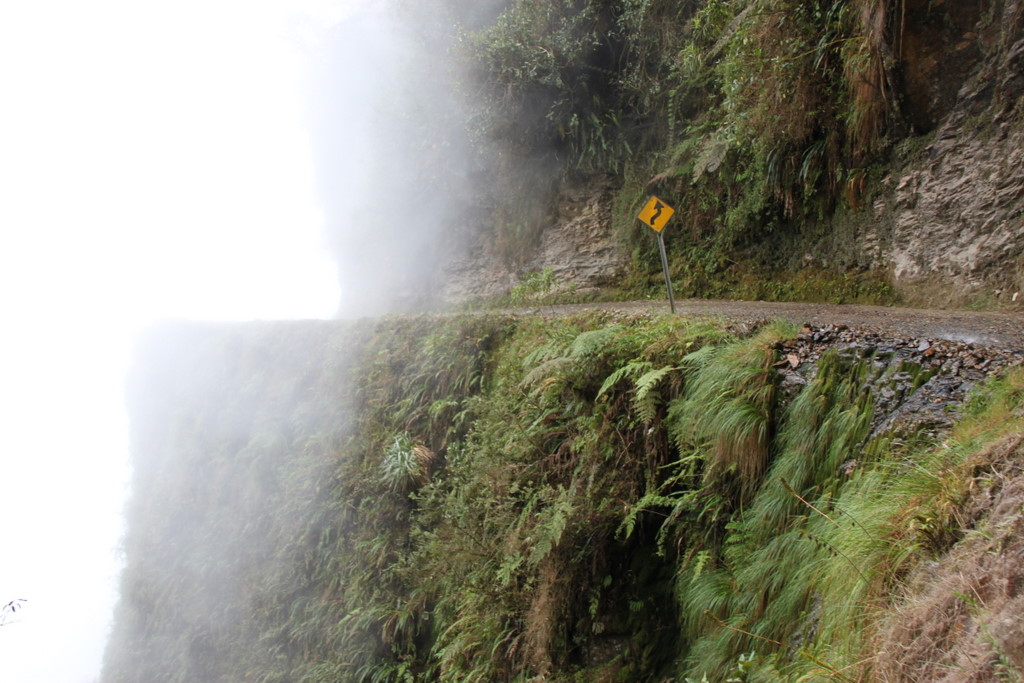
You’re five hours into the Carretera Austral. The road is unpaved, the Aysén mountains are doing something extraordinary outside the window, and the playlist assembled in a rush before leaving Santiago just served you the same chart hit for the second time. The moment collapses.
This is the core problem with road trip music in Latin America: most travelers default to mainstream streaming charts — heavy on reggaetón and pop — or rely on generic playlists built by algorithms with no regional knowledge. Neither solution holds up across the actual geography: Caribbean coast, Andean passes, Pacific desert, Southern steppe. These are not the same drive.
The five artists below were selected on one criterion: sustained listening value over 200-kilometer-plus stretches. These aren’t the most-streamed. They’re the ones that typically work across terrain, time of day, and emotional state — which is a meaningfully different standard.
Why Most Latin Road Trip Playlists Collapse After Hour Two
There’s a structural issue worth examining before naming any artists. The dominant approach to building a Latin road trip playlist — sorting by streaming numbers — selects for engagement in short bursts, not sustained listening. Spotify’s editorial playlists optimize for the average session of 28–35 minutes. A road trip from Bogotá to Cartagena takes eight hours. These are incompatible design goals.
Reggaetón presents a specific durability problem on long drives. The genre’s rhythmic foundation — dembow pattern, 808 bass, compressed production — works brilliantly in enclosed spaces. It was developed for clubs, not open roads. Over a long Andean stretch, the consistent rhythmic density works against the landscape rather than with it. This isn’t a judgment about the music’s quality. It’s a functional observation about context.
The genres with the longest road trip utility, in most listener accounts, share a few characteristics: melodic variation within tracks, regional specificity in instrumentation, and the capacity to recede into the background when the view demands attention. Vallenato, son jarocho, cumbia, acoustic singer-songwriter work from the Southern Cone — these typically outlast their pop counterparts by several hours on the road.
The Streaming Trap in Playlist Building
When an algorithm builds your playlist, it pulls from recently popular tracks — which means it captures the most commercially polished, production-heavy version of a regional sound. That sounds smooth for 40 minutes. Over six hours, consistency becomes sameness. Deliberately selecting artists from different decades, countries, and subgenres within Latin America creates variation that holds attention far longer. Build the list yourself.
Genre Fatigue: When Your Brain Stops Listening
Listener accounts from long-distance driving consistently describe a phenomenon sometimes called genre saturation — the point at which the brain stops processing music as meaningful and begins treating it as noise. This typically occurs at the 90–120 minute mark when a single genre dominates the playlist. Alternating between cumbia, folk, and alt-Latin at irregular intervals delays this significantly. The variation needs to be built in deliberately; a shuffled single-genre playlist doesn’t solve it.
What Road-Trip-Worthy Actually Means
For the purposes of this evaluation: an artist earns road trip status if their catalog holds across 200 kilometers at varying speeds, works between 5 AM and midnight, and contains at least a subset of recordings that can recede when the landscape demands it. Five artists consistently clear that bar.
The 5 Artists: Comparison by Terrain and Function
| Artist | Country | Genre | Best Terrain | Key Album | Energy Level |
|---|---|---|---|---|---|
| Carlos Vives | Colombia | Vallenato / Rock Fusion | Caribbean coast, flat highways | Cumbiana (2019) | Medium-High |
| Natalia Lafourcade | Mexico | Folk / Son Jarocho | Mountain passes, dusk driving | Musas Vol. 1 (2017) | Low-Medium |
| Bomba Estéreo | Colombia | Electronic Cumbia | Long highway straightaways, night | Elegancia Tropical (2012) | High |
| Calle 13 | Puerto Rico | Alt-Latin / Hip-Hop | Urban sections, border crossings | Entren Los Que Quieran (2010) | Medium-High |
| Jorge Drexler | Uruguay | Acoustic / Candombe | Patagonia, empty desert roads | Salvavidas de Hielo (2017) | Low |
Energy level here measures rhythmic density and lyrical intensity — not artistic value. Low-energy recordings from Drexler serve fundamentally different road conditions than high-energy tracks from Bomba Estéreo. Both are necessary on a multi-day trip through diverse terrain. Neither replaces the other.
Carlos Vives and Natalia Lafourcade: The Foundation Layer
Carlos Vives belongs first on this list not because he’s the most critically serious artist here — he isn’t — but because vallenato has a structural compatibility with open roads that most other Latin genres don’t match.
Vives took traditional Colombian vallenato (built around accordion, caja drum, and guacharaca) and fused it with rock and pop production beginning in the early 1990s. The result is immediately accessible — you don’t need prior exposure to Colombian regional music to feel it — while retaining the geographic specificity that generic Latin pop lacks. His 2019 album Cumbiana is the most complete artistic statement in his catalog: a deliberate return to the roots of Colombian coastal music with modern production clarity. His earlier collaborative single “La Bicicleta” with Shakira (over a billion Spotify streams) demonstrates the breadth of his appeal, but Cumbiana has the textural variation — tracks like “Canción Bonita” with Ricky Martin — that sustains across longer stretches.
Natalia Lafourcade works in almost the opposite sonic territory, and she belongs on this list for exactly that reason. Her 2017 record Musas Vol. 1, recorded with acoustic guitarists Los Macorinos (both in their 70s at the time of recording), is built on traditional Mexican son jarocho and bolero. No studio production. No compression. Acoustic guitar, voice, and space.
That space is what makes it valuable on the road. “Tú Sí Sabes Quererme” and “Hasta la Raíz” work at low volume against mountainous terrain in a way that denser recordings cannot. When you’re crossing the Oaxacan highlands or descending into the Copper Canyon at dusk, Lafourcade’s recordings reflect the landscape rather than compete with it. That function is hard to replicate.
Recommended Listening Windows
- Carlos Vives: 45–60 minutes per session; strongest in morning hours when rhythmic brightness is an asset
- Natalia Lafourcade: 30–40 minutes; most effective at transitional moments — dawn, dusk, entering new geographical territory
- Avoid back-to-back Vives sessions past 90 minutes: accordion-forward arrangements accumulate in ways that become wearying on long stretches
Where Each Artist Falls Short
Vives has limited utility on empty Patagonian steppe — the brightness of vallenato sits oddly against that landscape. Lafourcade’s quieter recordings get lost at highway speeds with windows down; they weren’t designed for 120 km/h ambient noise competition.
Bomba Estéreo: The Artist Most Road Trippers Skip
This is the most consequential omission in the typical Latin road trip playlist, and skipping it is a real mistake.
Bomba Estéreo — the Bogotá project led by vocalist Li Saumet and producer Simón Mejía — makes electronic cumbia that sits in a category essentially by itself. Their 2012 album Elegancia Tropical and the 2015 Amanecer are the two releases with the most road utility. Mejía builds tracks around traditional Colombian cumbia rhythms processed through electronic production — heavy bass, synthesized percussion, occasional field recordings from the Colombian coast. The result reads simultaneously as ancient and contemporary in a way that few Latin producers have managed.
“Fuego” and “To My Love” from Amanecer are the most widely streamed tracks; “To My Love” reached #1 on Billboard’s Hot Latin Songs in 2015. But the earlier, rawer material on Elegancia Tropical — particularly “Caracol” and “Fiesta” — has more structural variation and holds up better across consecutive listens on a long drive. That’s the album to start with.
On an open highway at night, with sufficient volume, their tracks create an experience that no other artist on this list replicates. That’s a specific claim, but listener accounts from multi-day Latin American road trips consistently support it.
When Not to Use Bomba Estéreo
Avoid them on technical mountain roads in poor visibility or rain. Their rhythmic density draws a share of cognitive attention that may need to stay with the road itself. Reserve Bomba Estéreo for straight-line driving where you can afford to be fully inside the music. Save the intense tracks — “Somos Dos,” “Fuego” — for open highway moments specifically.
Calle 13 and Jorge Drexler: Two Artists for Two Very Different Roads
These two artists occupy opposite ends of the emotional spectrum. Which one you reach for typically indicates more about where you are in the drive than about musical preference.
Why Calle 13 Earns Its Spot on the List
Calle 13 — René Pérez (Residente) and Eduardo Cabra (Visitante) from Puerto Rico — built their reputation on politically sharp, formally ambitious alt-Latin hip-hop. Their 2010 album Entren Los Que Quieran won multiple Latin Grammy awards and remains, in most critical assessments, one of the more complete artistic statements in Latin music of the past two decades. The album moves across cumbia, Latin trap, bolero, and spoken word in ways that challenge easy genre classification.
On a road trip, they function best in urban sections — entering a major city, crossing a land border, navigating congested highway approaches — where their intensity matches the environment. “Latinoamérica,” the album’s closing track, runs just over eight minutes and makes an explicit argument for the continent you’re driving through. Play it once, deliberately, when crossing a meaningful border. It earns that specific placement.
Calle 13 is not background music. Their albums reward close attention and waste when treated as ambient sound. Don’t run them during the moments when you’re not actually listening — that’s when Drexler is the better call.
Why Jorge Drexler Is the Specialist for Empty Roads
Jorge Drexler is Uruguay’s most internationally recognized songwriter. His 2005 Oscar for Best Original Song — “Al Otro Lado del Río” from The Motorcycle Diaries — was the first Oscar ever awarded to a Spanish-language song, a data point that tells you something about his capacity to communicate across cultural contexts without losing specificity.
His 2017 Salvavidas de Hielo and 2026 Tinta y Tiempo are built on acoustic guitar, sparse production, and lyrics that reward repeated listens. “Telefonía” and “Eco” from Tinta y Tiempo are particularly well-suited to long, empty driving. Drexler’s recordings fill silence without overwhelming it — the specialist function that Patagonian steppe and Atacama desert stretches require. No other artist on this list does that job as well.
How to Sequence These Five Artists by Terrain
Having the artists is the easy part. Sequencing is where most road trip playlists fail. A framework based on the terrain patterns most common on Latin American multi-day routes:
- Morning departure (first 90 minutes): Carlos Vives. The rhythmic brightness of vallenato is well-matched to early-morning alertness needs. It starts the drive with forward momentum rather than forcing attention before coffee has cleared.
- Mid-morning, open highway: Bomba Estéreo. Once fully awake and on a clear road, their electronic cumbia works hardest. Save the most intense tracks — “Fuego,” “Somos Dos” — for this window specifically.
- Midday transition, new terrain: Natalia Lafourcade. Lower energy, higher lyrical density. Effective for moments when the landscape shifts and attention moves outward rather than inward.
- Mid-afternoon (2–4 PM): Calle 13. The attention dip that typically hits in early afternoon responds well to their lyrical density. This is the window when passive listening becomes most dangerous on long drives — Calle 13 actively demands engagement.
- Evening and final approach: Jorge Drexler. His tempo and acoustic texture work with end-of-day fatigue rather than against it. You’re not being pushed forward — you’re arriving.
Common Sequencing Mistakes to Avoid
- Opening with Drexler: his recordings are too quiet to counteract morning fatigue, and they waste his specialty function on the wrong time of day
- Bomba Estéreo on mountain switchbacks at night: their rhythmic density competes directly with the concentration the road requires in low-visibility conditions
- Calle 13 as ambient driving music: their catalog loses most of its value when treated as background audio — they were built for active listening, not wallpaper
- Playing only one artist for more than two consecutive hours: genre fatigue sets in reliably past the 90-minute mark regardless of how good the music is
These five artists — sequenced by terrain, time of day, and alertness level — typically cover the full emotional range of a multi-day Latin American road trip. The gap left by any single one of them is real and noticeable on the road. Carlos Vives for the mornings and coastal stretches. Bomba Estéreo for the long, clear straightaways. Natalia Lafourcade for the passes and the transitional hours. Calle 13 for the moments when the drive demands you pay attention. Jorge Drexler for everything that’s left.
This article is for informational and entertainment purposes only. This is not legal advice — consult a licensed attorney for any legal matters.