
Kyoto 4 Day Itinerary Culture: Kyoto in 4 Days: A Culture-First Itinerary That Skips the Tourist Traps
Most Kyoto itineraries fail because they treat the city like a checklist. You rush from Kinkaku-ji to Fushimi Inari to Arashiyama in a blur of buses and crowds, then leave wondering what you actually experienced. Kyoto is not a city of attractions. It is a city of layers. Temples that reveal themselves slowly. Gardens that change with the light. Alleys where the modern world falls away after one turn.
This 4-day plan is built for people who want depth, not volume. You will see the famous sites, yes. But you will see them at the right time, in the right order, and with enough context to actually feel something. No tour buses. No selfie-stick gauntlets. Just Kyoto at its most honest.
Day 1: East Kyoto and the Philosophy of Walking
Start your first morning in the Higashiyama district. This is the Kyoto you came for. Wooden buildings, stone-paved lanes, temple bells in the distance. But here is the mistake everyone makes: they start at Kiyomizu-dera at 10 AM with ten thousand other people. Do not do that.
Start at 7:30 AM at the Sanneizaka and Ninenzaka slopes. These preserved streets are empty before the shops open. You get the full effect of the machiya townhouses without the crowds. Walk slowly. This is not a commute.
Then enter Kiyomizu-dera when the gates open. The main hall’s wooden terrace juts out over the hillside with no nails in its construction. In 2026, the full restoration is complete, so you get the classic view of the pagoda and the maple valley below. Spend 90 minutes here. The Otowa Waterfall at the base is where you drink from one of three streams — health, longevity, or success. Pick one. Drinking from all three is considered greedy.
In the afternoon, walk north through Maruyama Park to Yasaka Shrine. Then turn east into the lanes of Gion. You will not see geisha at noon. You will see tourists looking for geisha. That is fine. The real value is the architecture and the tea houses. Look for the red lattices and the wooden signs with calligraphy. These are not props. They are working businesses, some over 300 years old.
Where to Eat Without Getting Tourist-Menu’d
Skip the restaurants directly on Shijo-dori. Walk two blocks north or south. In the Gion area, try Gion Karyo for a kaiseki lunch that costs less than dinner. Around $45 per person for a multi-course meal that introduces you to seasonal Kyoto cuisine. For something faster, Izuju near Yasaka Shrine has been selling saba-zushi (mackerel sushi) since 1781. It costs about $12 for a set. That is 240 years of consistency.
Day 2: The North and the Art of Restraint
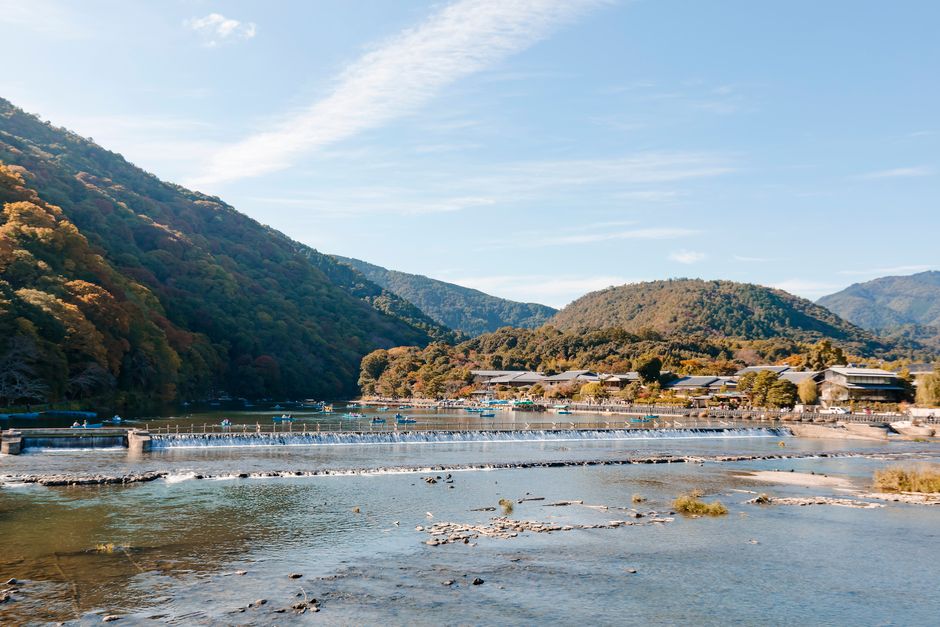
Day 2 is about the north. Kinkaku-ji, Ryoan-ji, and Daitoku-ji. But here is the thing: Kinkaku-ji is the most over-photographed building in Japan. The golden pavilion is stunning for about 10 minutes, then you are shuffled along a prescribed path with hundreds of people. Still worth seeing once. Just know what you are getting.
Go at 9 AM when it opens. The morning light on the gold leaf is different from the afternoon. The pond reflection is clearest before the wind picks up. You will be done in 45 minutes.
Then go to Ryoan-ji. This is the opposite of Kinkaku-ji. No gold. No crowds. Just a rectangle of raked gravel and 15 rocks. The famous puzzle is that from any viewing position, you can only see 14 of the 15 rocks. The 15th is always hidden. It is a meditation on incompleteness. Sit on the wooden veranda for 20 minutes. Do not take photos. Just look.
After Ryoan-ji, skip the tourist lunch spots and take a 15-minute walk to Sarasa Nishijin. This is a coffee shop inside a former sento, or public bathhouse. The tile walls and high ceilings are original from the 1930s. The coffee is good. The atmosphere is better.
Daitoku-ji: The Temple Complex Most People Miss
Daitoku-ji is a walled complex of 24 sub-temples. Most tourists never enter because it looks closed. It is not. Several sub-temples are open to the public, including Daisen-in and Zuiho-in. Daisen-in has a dry garden from 1513 that depicts a river flowing from a mountain to the sea. Zuiho-in has a modern rock garden with a cross hidden in the stones, built for a Christian daimyo. Both are quiet. Both are profound. Entry is about $5 per sub-temple.
This is where you understand the difference between seeing Kyoto and experiencing it. Kinkaku-ji is a photograph. Daitoku-ji is a feeling.
Day 3: Arashiyama Without the Bamboo Stampede
Everyone goes to Arashiyama for the bamboo grove. The bamboo grove is 200 meters long and packed with people holding phones. Here is the truth: the bamboo grove is a 15-minute walk. It is beautiful, but it is not worth the morning scramble.
Go anyway. But go at 7 AM. You will have the grove almost to yourself. The light filters through the stalks in vertical stripes. The sound of the wind through the bamboo is something you will not forget. Then leave before the tour buses arrive at 9.
What most people miss in Arashiyama is the Okochi Sanso Villa. This was the home of Okochi Denjiro, a silent film actor who built a stunning garden and teahouse on the hillside. Entry is $7 and includes a cup of matcha and a small sweet in the tea house. The garden paths wind through moss, stone lanterns, and viewpoints over the city. It is the best value in Arashiyama.
In the afternoon, walk north along the Hozu River to Jojakko-ji and Gio-ji. Jojakko-ji climbs a hillside with maple trees and stone lanterns. Gio-ji is a tiny temple with a moss garden that looks like a green carpet under a canopy of trees. It is the quietest place in Arashiyama. Entry is $3. You will sit on a bench and not want to leave.
Day 4: Fushimi Inari and the Thousand Gates
Fushimi Inari is the most photographed place in Kyoto. The orange torii gates winding up the mountain are iconic. But most people only see the first 200 meters. The full trail is 4 kilometers and takes 2-3 hours. The difference between the first section and the upper sections is the difference between a theme park and a pilgrimage.
Go at 6:30 AM. Yes, that early. The gates are empty. The foxes, the messengers of Inari, watch you from stone pedestals. The path climbs through a forest of cedar and cypress. By the time you reach the halfway point at Yotsutsuji, you can see the city spread out below.
Here is the key: do not turn back at the halfway point. Continue to the summit. The upper trail is nearly empty. You will pass smaller shrines, stone carvings, and views that no one on Instagram has seen. The full loop takes about 2.5 hours at a slow pace. Bring water. There are vending machines, but they get more expensive as you climb.
The Torii Gate Math
There are approximately 10,000 torii gates at Fushimi Inari. Each one is donated by a business or individual. The smallest gates cost about $4,000. The largest cost over $100,000. The donor’s name and the date of donation are carved on the back of each gate. Walking through them is walking through a ledger of Japanese commerce and faith.
In the afternoon, return to central Kyoto and visit Nishiki Market. This is the food street that runs five blocks through the center of the city. Go hungry. Eat tako tamago (a candied baby octopus with a quail egg in its head), yuba (tofu skin), and fresh mochi. The market has been operating since 1310. It is not a tourist trap. It is a working market that happens to welcome tourists.
Where to Stay: Location Beats Luxury
Kyoto is not a city where you stay in a fancy hotel and commute to the sights. Location matters more than amenities. The best areas are Higashiyama, Gion, and the area around Kyoto Station. Each has a different character.
For first-time visitors, stay near Sanjo Station or Gion-Shijo Station. You are walking distance from the Higashiyama temples, Gion, and the Kamo River. The river is where Kyoto comes alive at night. Restaurants, bars, and people sitting on the banks watching the water. It is the best free activity in the city.
If you want a traditional experience, book a night in a ryokan. Ryokan Yoshida-sanso is a 1932 villa that was once the home of a noble family. It has two guest rooms, a garden, and a kaiseki dinner that is worth every yen. Expect to pay $200-300 per person per night. It is not cheap. It is also not something you will forget.
For budget travelers, the Piece Hostel Kyoto near Kyoto Station has capsule-style beds in a modern building for about $30 per night. It is clean, quiet, and the common area has a full kitchen. The trade-off is a 15-minute train ride to the main sights.
Kyoto Transport: The Bus Is Not Your Friend
Here is the most important practical advice in this entire article: do not rely on Kyoto’s buses. They are slow, crowded, and often stuck in traffic. The city is compact enough that walking plus the subway plus the occasional taxi is faster than any bus route.
The Kyoto subway has two lines: the Karasuma Line (north-south) and the Tozai Line (east-west). That is it. Most of the major temples are not on the subway. That is why walking and taxis matter. A taxi between two points in central Kyoto costs $8-15. If you are two people, it is often cheaper than two bus fares and three times faster.
Get an ICOCA card at any station. It works on trains, subways, and buses across Japan. Load it with $30 and you will not think about tickets for the rest of the trip. The card also works at vending machines and convenience stores.
The Timing Cheat Sheet
| Site | Best Time | Entry Cost | Time Needed |
|---|---|---|---|
| Kiyomizu-dera | 8:00 AM opening | $4 | 90 min |
| Kinkaku-ji | 9:00 AM opening | $4 | 45 min |
| Ryoan-ji | 10:30 AM | $4 | 60 min |
| Daitoku-ji sub-temples | 11:30 AM | $5 each | 90 min |
| Arashiyama Bamboo Grove | 7:00 AM | Free | 30 min |
| Okochi Sanso Villa | 8:30 AM | $7 | 60 min |
| Gio-ji | 2:00 PM | $3 | 30 min |
| Fushimi Inari full loop | 6:30 AM | Free | 2.5 hours |
| Nishiki Market | 11:00 AM | Free entry | 90 min |
The pattern is clear. Early mornings are non-negotiable. The difference between 7 AM and 10 AM at any major site is the difference between solitude and a queue. Kyoto rewards early risers. Sleep in and you pay for it with crowds.
This itinerary works because it respects the city’s rhythm. You start before the tour buses, you rest in the afternoon, and you return to the streets in the evening when the lanterns come on. Four days is enough time to understand Kyoto. Not to see everything. But to feel why people have been writing poems about this city for a thousand years.